Enjoy. · 6 MIN READ
Life by a swimming pond: design for the days you will actually use it
Think beyond the first swim: make space for quiet mornings, easy access and time spent beside the water.
In this guide
Begin with the day you want
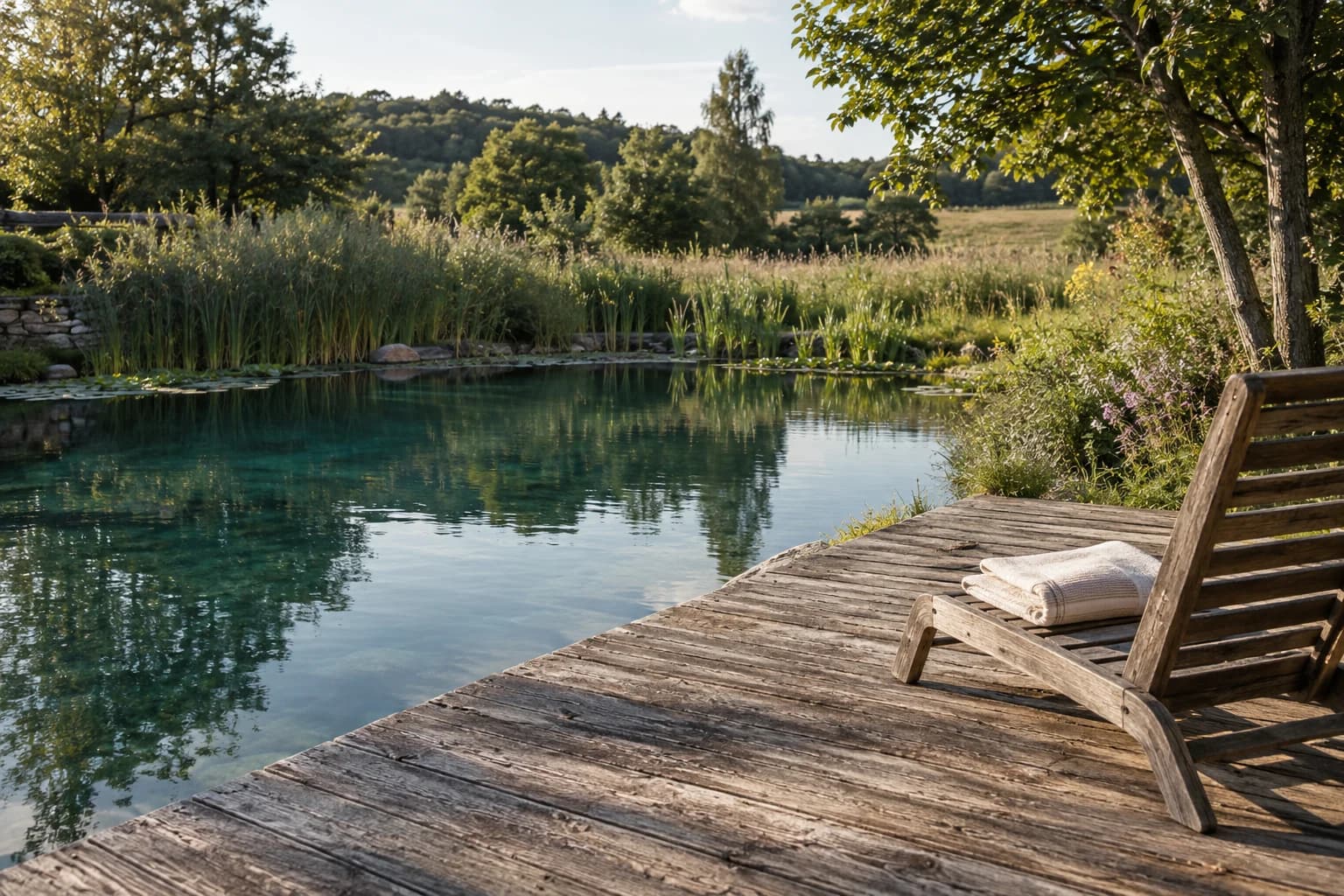
Imagine an ordinary morning beside the pond. Where would you leave a towel? Which route would you take from the house? Would you want a seat in the sun, a place in the shade or a clear stretch for swimming? These small questions give a design a purpose beyond looking attractive.
You do not have to use the pond in the same way every day. A short dip and an afternoon spent reading at the edge ask different things of the space. Include both in the brief if both matter to you.
Make getting there simple
Walk the route you expect to use and discuss its practicality with the designer. Think about wet feet, places to sit and how people will enter and leave the water. Have the relevant access and safety details specified for the people who will use it.
A convenient place for towels and approved cleaning tools can be more useful than an extra decorative feature. Decide what belongs close to the water and what should be stored elsewhere.
Leave room to notice the garden
Choose a place to sit where you can watch the pond without stepping into planting or blocking the route to the water. Check the view from indoors too: watching what changes can be part of using the garden on days when nobody swims.
Notice what is already there
Keep a short record of the date, weather, approximate numbers and where an animal was seen. A photograph taken from a distance can help with later identification. Record “unidentified flying insect” when you are unsure; a brief visit cannot establish which species live or breed there.
Let animals arrive on their own. Froglife's garden advice warns against moving amphibians or spawn between ponds because this can spread disease and unwanted species. Its examples concern UK amphibians; use local conservation advice for the wildlife in your region.
Put shelter where people do not need to work
Froglife describes terrestrial shelter such as long vegetation and log piles, reflecting the time amphibians spend out of water. Discuss a suitable patch in the surrounding garden. Keep it clear of the swimming entry, inspection covers, tool route and places where people stand to service equipment.
Choose identified plants suited to the local climate and intended position, with native status and restrictions checked for your region. Our plant-selection guide helps separate habitat planting from plants assigned a role in water treatment. Plan for mature growth and later access before filling every edge.
Check how animals can leave
The RHS water-habitat guide identifies steep-sided water features as a problem for wildlife unless an exit is provided. Ask the pond designer how small animals can leave at the expected water levels, and how that detail fits the lining, circulation, swimmer access and protective barriers.
Keep this as a designed detail. Loose branches, improvised gaps in barriers or material placed over an intake can create other problems. If you repeatedly find trapped animals, record the location and ask for that part of the design to be reviewed. Seek local wildlife assistance for an injured animal rather than guessing at its care.
Make darkness and care part of the plan
The UK's Bat Conservation Trust recommends avoiding unnecessary lighting and keeping some habitat dark. Ask for essential route lighting to be directed where people need it, with spill onto the pond and surrounding habitat considered in the design.
Before mowing beside the pond, check for animals in the work area; Froglife particularly highlights newly emerged froglets. Agree locally appropriate timing for discretionary habitat work while keeping required pond servicing on its operating plan.
Add those observations to the care routine. Wildlife sightings are useful garden records; the separate swimming-water checks below still determine the response to a water-quality concern.
Keep the swimming decision separate
An inviting view is a pleasure, but readiness for swimming follows the water-quality and operating plan. Keep that routine simple and accessible so it supports enjoyment instead of relying on guesswork.
Read the water-quality guide before planning regular swimming use.
Try the route before you build it
Lay out the proposed water edge on the lawn with a visible line, then walk from the house to the future entry. Place a chair where you expect to sit. Check whether that view is comfortable and whether the path cuts through another part of daily life. This dry rehearsal is easy to change; a finished edge is not.
Write down where towels, footwear and an outdoor seat belong. Keep the access route separate from places where cleaning tools or garden waste would otherwise collect. Have access, barriers and supervision arrangements designed for the people using the property, including visitors.
Enjoyment can include the months without swimming
Stefan’s Springhill Stories build account was written when the new pond was too cold for the first swim. He was already enjoying the view and the arriving wildlife. That modest observation is more convincing than a promise that a pond will change your life. It also explains why the view from indoors deserves a place in the design brief.
A sunny day does not settle the water temperature
The RNLI’s cold-water guidance recommends gradual entry and staying close to an exit. Cold water can seriously affect breathing and swimming ability; a private garden does not remove that effect. Plan swimming around the conditions and suitable supervision, rather than assuming that familiar surroundings make every day suitable.
Keep the water-quality plan accessible to whoever is responsible for use. An ordinary care routine can make decisions simpler, leaving more of your attention for the swim or the quiet cup of tea beside it.
Let the space evolve thoughtfully
After living with the pond for a season, note the places you use most and the small inconveniences you repeatedly notice. Discuss improvements with the designer before changing edges, access, planting or equipment.
Use the care routine to keep practical responsibilities predictable. A pond becomes part of home through ordinary, repeatable moments, not only the first photograph.
Sources & context
Sources support the points identified in the guide. Supplier material describes that supplier’s approach. Owner accounts are attributed experiences, not independent performance tests.
- RHS — Water habitats ↗Checked 18 September 2026 UTC. General garden-habitat guidance supports observing wildlife and considering exits at steep-sided features. Exit details for a swimming pond need the project's design; no rainwater preference, dimensions or water-quality guarantee transferred.
- RNLI — Cold water dipping ↗General cold-water precautions, including gradual entry and staying near an exit. Not site-specific supervision advice.
- Stefan, Springhill Stories — Our natural swimming pond ↗Owner’s November 2017 construction account from Wallonia. Not a long-term performance report or transferable planning advice.
- Froglife: Frogs and toads in my garden ↗Checked 18 September 2026 UTC. UK conservation guidance on amphibian terrestrial habitat and avoiding transfer between ponds; no global species or legal rule inferred.
- Froglife: Gardening tips ↗Checked 18 September 2026 UTC. Supports inspecting the work area before mowing, particularly around emerging froglets. No fixed global mowing season, net size or pond treatment adopted.
- Bat Conservation Trust: Why bats matter to gardens ↗Checked 18 September 2026 UTC. UK conservation guidance on unnecessary lighting, dark habitat and directional light where needed; no lighting level, spectrum or species-presence guarantee inferred.