Plan. · 4 MIN READ
Natural pool vs swimming pond: space and care
Compare planted swimming ponds with pool-shaped biological systems: usable swimming space, treatment areas, seasonal appearance and care.
In this guide
Compare two biological design styles
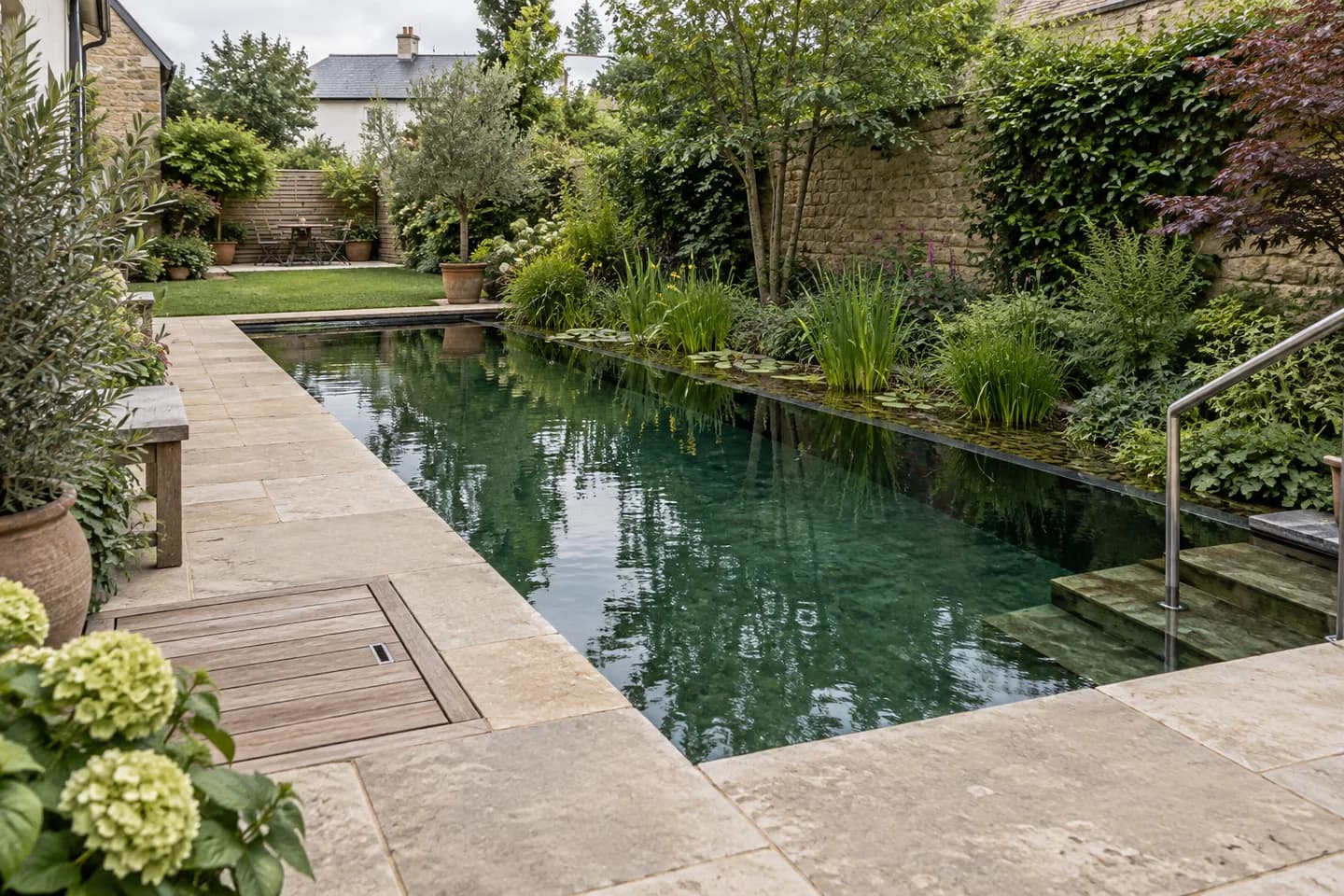
A planted swimming pond and a pool-shaped biological system offer different ways to arrange swimming, treatment and garden space. Compare the usable swim area, whole treatment footprint and care tasks before choosing the look.
Suppliers use names such as natural pool, swimming pond and bio pool differently. Ask how each proposal treats the water and what the owner will need to maintain.
Comparing a biological system with a conventionally chlorinated pool? Use our separate pond versus conventional pool comparison.
The planted swimming pond
The RHS describes swimming ponds as combining a deeper swimming area with shallow gravel areas and selected plants. This approach can make the pond an important part of the wider garden, rather than a separate recreational object.
When reviewing a planted proposal, ask which parts of the drawing are actually available for swimming. A generous overall footprint may include substantial treatment and planting space. Also ask how the appearance changes outside the growing season.
The more pool-like approach
Biotop’s Living Pool is one example of a system that uses an underground biofilter and a phosphate filter instead of a planted regeneration zone. This illustrates why a large planted margin is not a universal requirement for every biological swimming system.
That is a product-specific example, not a promise that any small garden can accommodate a natural pool. Equipment access, bathing capacity and servicing space still belong in the layout.
Compare like with like
Give each designer the same swimming brief. Request the usable swim dimensions, the total footprint, equipment locations, expected operating schedule and a written maintenance plan.
Ask for costs in matching categories. One proposal may include surrounding paths and planting while another stops at the water’s edge. One may include commissioning and a first-season visit while another charges separately.
Arrange a visit to a comparable installation if an owner and builder are willing. Ask permission first, and focus your questions on living with it: cleaning, access, seasonal appearance and what they would change.
Compare two ordinary Saturdays
For a planted pond, imagine removing windblown leaves, checking the circulation and doing the plant work in your care plan. For a pool-shaped biological system, imagine inspecting baskets and filter equipment and cleaning the surfaces. Neither picture is a promised maintenance schedule; it is a way to ask what the owner actually does.
Then consider what would bother you. Would you dislike visible plants dying back? Would a floor-cleaning robot feel convenient or irritating? Would you rather maintain a planted margin or keep a service contract for specialised equipment? Your answers can matter more than the outline of the pool.
A comparison sheet that exposes missing detail
- Swimming: usable length, width, depth profile, entry and intended number of users.
- Space: water footprint, treatment footprint, equipment access and remaining dry garden.
- Care: owner tasks, professional visits, consumables and what happens during holidays.
- Appearance: recent summer and winter photographs of the same reference installation.
- Accountability: who handles an equipment fault, water-quality concern or damaged finish.
Leave unanswered boxes empty. A blank is useful information; filling it with an assumption makes the offers look more comparable than they are.
Our preference for a first project is a written operating plan you can understand before accepting the quote. The more you value a particular look, the more useful it is to see that look after a season of use. Start the money comparison with the quote worksheet, then check maintenance responsibilities.
Make the decision in this order
Decide how you want to use the water. Check the space and practical constraints. Compare treatment designs. Then refine the look. Working in the opposite order can leave you trying to force a favourite photograph into an unsuitable site.
Use our cost-planning guide to prepare a comparable brief and our filtration guide to prepare questions for the technical discussion.
Sources & context
Sources support the points identified in the guide. Supplier material describes that supplier’s approach. Owner accounts are attributed experiences, not independent performance tests.
- Biotop — Living Pool ↗Manufacturer description of one specific system, not an independent comparison.
- RHS — Water habitats ↗Overview of planted swimming ponds in a garden setting.