Maintaining a swimming pond in a drought-prone area can be both rewarding and challenging. As a pond owner, you might often wonder how to keep your pond full during dry spells while ensuring you maintain an eco-friendly and vibrant ecosystem. Sustainable swim ponds are increasingly recognized for their beauty and functionality, providing not just a place for relaxation but also a habitat for local wildlife. In arid climates, specific strategies are essential to manage these water features effectively. This guide is designed to offer practical, actionable strategies for managing your swim pond sustainably, covering various aspects such as water conservation techniques, suitable native plants, innovative technologies, and regulatory considerations.
You’ll learn about effective practices that not only help you maintain water levels during droughts but also enhance your pond’s environmental benefits. With the right approaches, your pond can thrive even in dry conditions, providing a refreshing retreat while supporting local biodiversity.
Keeping Your Swim Pond Full During Drought
Keeping your swim pond full during dry spells in an arid climate can feel daunting. Understanding evaporation rates is crucial, as they significantly affect your pond’s water levels. Generally, water evaporates quickly in intense sunlight and high temperatures. For instance, implementing shading structures can reduce evaporation rates by up to 90%. This means you can consider installing trees or awnings that create a cooler microclimate above your pond.
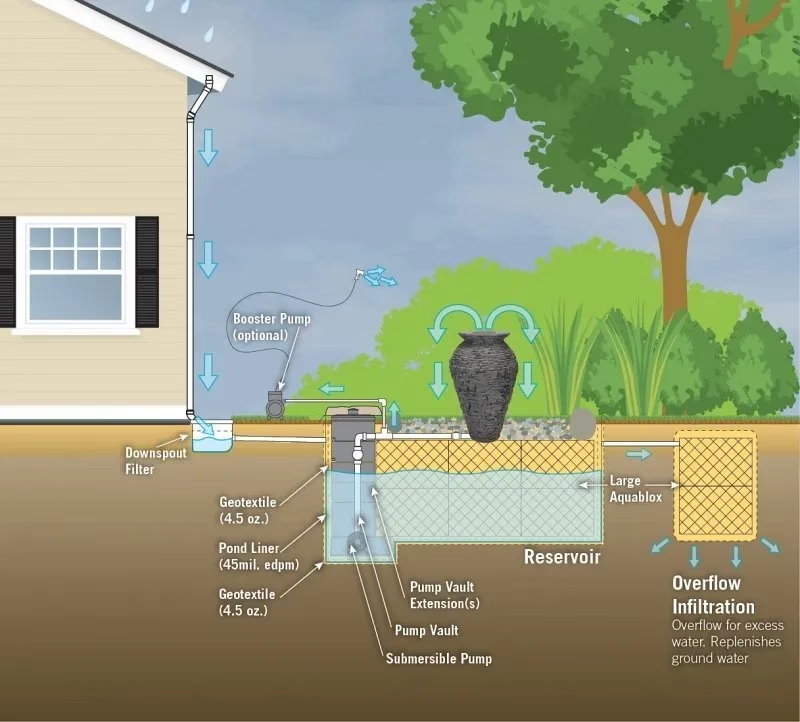
Rainwater harvesting is another effective strategy that can significantly help. By collecting rainwater from surfaces like roofs, you can redirect this water to replenish your pond. Numerous case studies demonstrate that well-implemented rainwater systems can yield substantial water savings; for example, one successful system captured enough rainwater to maintain pond levels throughout an entire dry season.
In addition, you might want to invest in intelligent water monitoring systems that provide real-time feedback. These modern systems can notify you of leaks or significant changes in water quality, enabling proactive management. By combining these techniques, you can greatly enhance your pond’s resilience against drought.
Illustration of a rainwater harvesting system designed for ponds (Source: Aquascape Inc)
Innovative Evaporation Reduction Techniques for Your Pond
To effectively minimize water loss due to evaporation, there are several innovative methods you can implement. One highly effective method is using floating covers, which can dramatically reduce evaporation. Research indicates that these covers can decrease water loss by as much as 95%, providing considerable savings during hotter months. This approach may seem unconventional, but it offers tremendous functionality while preserving the aesthetic quality of your pond.
Creating windbreaks with native plants is another useful tactic. Such windbreaks can protect the pond surface from direct wind exposure, which often promotes evaporation. Additionally, redesigning your pond to have a greater depth-to-surface area ratio can lessen water exposure to sunlight, further reducing evaporation.
Incorporating native flora around your pond not only enhances its beauty but also helps in creating natural shading, protecting your pond’s water levels effectively. By applying these methods, you can create a sustainable swimming space that thrives despite the challenges posed by arid conditions.

A conceptual diagram detailing the components of an evaporation pond design (Source: ResearchGate)
Harnessing Rainwater Benefits for Your Swim Pond
Integrating rainwater harvesting into your pond management strategy can have a considerable impact, especially in drought-prone regions. To set up an effective rainwater harvesting system, start by identifying surfaces that can be utilized for water collection. Roofs often serve as excellent sources, allowing you to collect rainwater in storage tanks that can then be redirected to your pond.
Cloudwater management strategies are additionally beneficial for optimizing water use around your pond. Besides reducing your water bill, harvesting rainwater helps maintain balanced water levels, promoting healthier aquatic habitats.
When designing your rainwater harvesting system, it’s vital to check local regulations that may govern water collection. Familiarizing yourself with relevant legal frameworks will ensure that your system is compliant with safety and quality standards, allowing you to focus on enjoying both a recreational space and an environmentally responsible project.
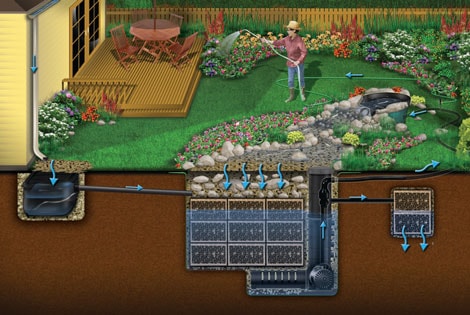
An educational illustration detailing the components of a rainwater harvesting system suitable for integration with ponds (Source: Aquascape)
Choosing the Right Plants for Drought Resistance
Selecting appropriate plants for your swim pond is crucial, particularly in arid climates where water conservation is essential. Native aquatic plants like Cattails (Typha spp.) and Pickerel Rush (Pontederia cordata) thrive in dry conditions and effectively filter water, making them ideal choices for your space.
These native plants contribute to water quality by absorbing excess nutrients and providing essential habitats for beneficial microorganisms. They also help stabilize pond banks and reduce erosion. Knowing which native species flourish around your pond not only supports water quality maintenance but enhances the overall aesthetic and ecological stability of your pond.
Additionally, incorporating these drought-tolerant plants can create a resilient flora that supports various wildlife. With proper care, your pond can become a thriving habitat for aquatic life, even when facing the challenges of dry conditions.

A vibrant garden featuring native plants suitable for landscaping around ponds (Source: Squarespace)
Exploring Technology in Pond Water Management
In an increasingly digital world, leveraging technology can enhance your pond management efforts significantly. One major advancement is the use of smart water quality monitoring systems. Such devices continuously assess key water quality parameters, including pH, temperature, and turbidity, allowing you to make informed decisions quickly.
Moreover, biological filtration systems have emerged as sustainable alternatives to traditional chemical treatments. These systems utilize beneficial bacteria to break down waste and excess nutrients, ensuring that your pond remains clear and healthy without heavy reliance on chemicals. This balance not only improves water quality but also promotes an environmentally friendly ecosystem.
When you compare these modern technologies to traditional methods, it becomes clear that employing advanced solutions can enhance efficiency and sustainability in managing your pond. Expect to see lower long-term costs while effectively managing your pond’s health.
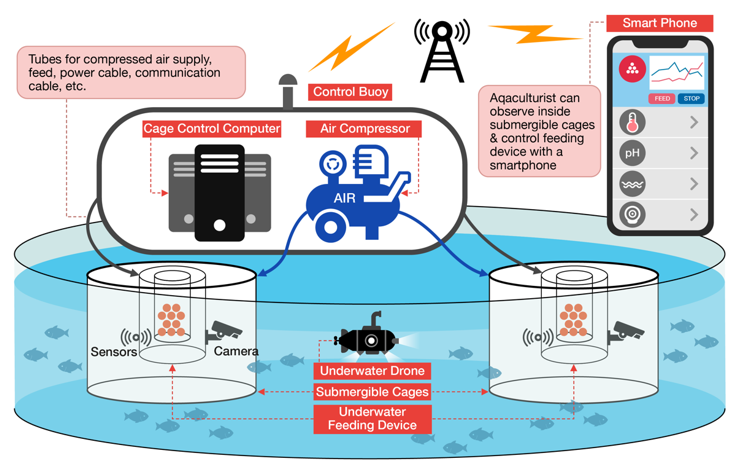
Infographic illustrating a smart water quality monitoring system for managing aquatic environments (Source: MDPI)
Wildlife Benefits and Biodiversity from Your Swim Pond
A natural swim pond serves not only as a recreational area but also as a vital habitat for various wildlife species. In arid regions, these ponds are crucial for the survival of amphibians, birds, and numerous insects. They often serve as breeding grounds for frogs and provide drinking and foraging sites for birds.
By fostering local biodiversity through your pond, you support a thriving ecosystem that enhances the environment’s overall health. Furthermore, your pond can create a microclimate that offers refuge for heat-sensitive species during extreme temperatures.
Encouraging a diverse range of flora around your pond can enhance pollinator populations, which are essential for plant reproduction. Thus, your swim pond can play a vital role in sustaining local biodiversity while providing a serene resting place for you and your family.
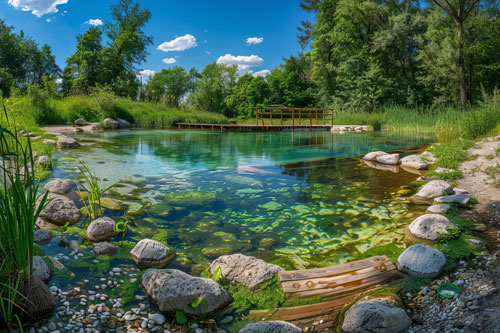
A natural swimming pond illustrating how these ecosystems provide habitats for wildlife (Source: Osmotics)
Navigating Regulations for Natural Swim Ponds
When setting up a natural swim pond, understanding the relevant local regulations and permitting processes is essential. Regulatory frameworks can differ significantly by region, particularly in arid areas where water use is closely monitored. Generally, you will need to communicate with local health departments to ensure compliance with safety and environmental standards, along with any zoning laws.
Taking time to familiarize yourself with the specific permits required in your area will streamline the approval process. It helps to engage with local pond professionals who have familiarity with the permitting landscape, ensuring that you meet all legal requirements while focusing on creating an attractive, functional swim pond.
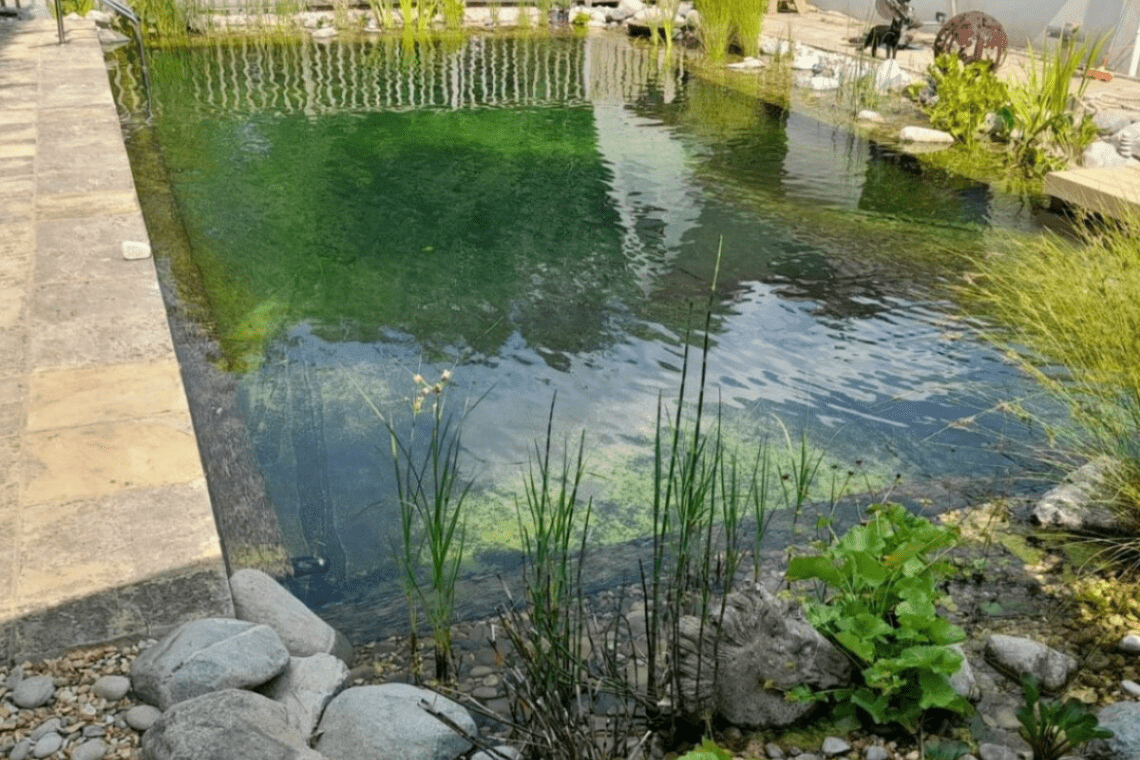
A chart depicting the regulatory framework for maintaining water quality in ponds (Source: Pond and Garden Design)
Conclusion
In summary, managing a sustainable swim pond in a drought-prone area requires a comprehensive approach that incorporates innovative water conservation techniques, strategic plant selection, modern technology, and a clear understanding of legal regulations. By implementing these practices, you can enjoy a vibrant pond while enhancing its ecological benefits.
Through informed decision-making, embracing technology, and promoting biodiversity, you create not only a recreational space but also a critical element of environmental stewardship. With attentive planning and careful management, your swim pond can flourish even amid drought conditions, becoming a serene sanctuary for both you and the surrounding wildlife.