
Natural Swimming Pools (NSPs) represent a significant advancement in sustainable swimming experiences, integrating natural ecosystems with human recreational needs. These pools serve as a viable alternative to traditional chlorinated pools, utilizing biological processes for water filtration and purification—effectively eliminating the need for chemical treatments. The increasing interest in NSPs can be attributed to their ecological benefits and growing awareness of environmental sustainability.
In recent years, the popularity of NSPs has surged among environmentally conscious homeowners who seek aesthetically pleasing and sustainable options for recreation. Through various forms of aquatic plants and microorganisms, these pools harness the natural cleansing power of the ecosystem to maintain water quality. Essential to this system is the careful selection of vegetation that enhances both visual appeal and ecological balance. Properly designed, NSPs can deliver clear, clean water comparable to that of conventional swimming pools, while simultaneously requiring lower maintenance efforts.
This comprehensive guide explores the principles of natural swimming pools and outlines the essential practices involved, including plant selection and maintenance strategies. Additionally, insights into ecological balance will be provided, ensuring a robust understanding of NSPs and the benefits they offer.
Understanding Biological Filtration in NSPs
Natural swimming pools utilize biological filtration as a cornerstone for achieving and maintaining clear water without the use of chemical additives.
-
Biological Filtration Process: The process operates by leveraging the interactions between aquatic plants and microorganisms. Plants absorb nutrients from the water, while microorganisms decompose organic matter—effectively purifying the aquatic environment.
-
Key Plant Types: NSP designs typically include five various types of aquatic plants, which encompass submerged, floating, emergent, and marginal species. For instance, submerged plants such as hornwort contribute not only by adding oxygen but also by facilitating nutrient uptake, while emergent plants like irises filter the water through robust root systems.
-
Ecological Interactions: The relationships among plants, microorganisms, and other aquatic organisms create a stable ecological framework, crucial for controlling algae growth and maintaining high water quality.
Research indicates that NSPs can achieve water quality comparable to that of natural lakes and ponds, allowing for a safe swimming experience without harmful chemical treatments. Continuous monitoring and analysis of this ecological system is vital for ensuring the sustainability of this eco-friendly alternative to traditional swimming pools.
Image: This diagram illustrates the biological filtration process in natural swimming pools. Source: The Heritage Life
Choosing the Right Plants for Your NSP
The selection of appropriate plants is fundamental to the success and health of a natural swimming pool.
-
Plant Selection Criteria: Plants for NSPs should be selected based on several criteria, including their nutrient absorption capabilities, adaptability to local climatic conditions, and rapid establishment. Native species are especially advantageous due to their ability to thrive in local environments.
-
Nutrient Removal: Certain submerged and floating plants, such as hornwort and Vallisneria americana, are effective in oxygenating water and consuming excess nutrients. Floating species like water lilies not only beautify the pool but also mitigate algae growth by effectively absorbing nutrients.
-
Ecological Balance: A diverse selection of plant species is crucial for maintaining ecological balance. Incorporating oligotrophic and mesotrophic species that are appropriate for low nutrient levels aids in optimizing the health of the pond ecosystem.
Studies have shown that NSPs can achieve remarkable phosphorus removal rates, as high as 96%, when thoughtfully designed and planted. This emphasizes the critical role of plant selection in ensuring the efficacy and aesthetics of NSPs.
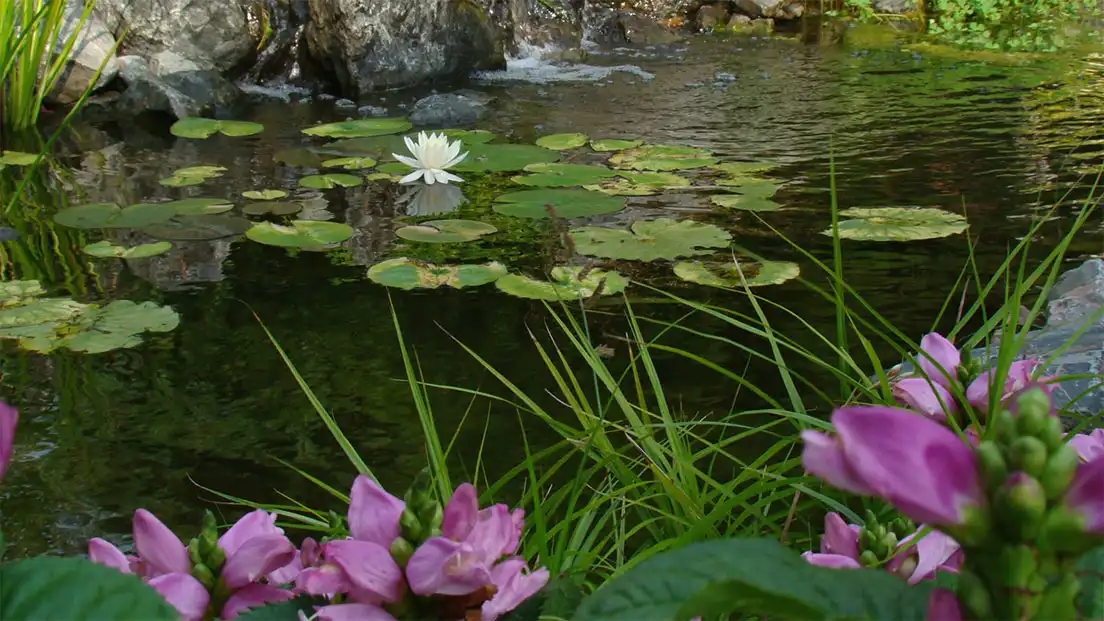
Image: Various aquatic plants suitable for natural swimming pools are depicted here. Source: Reflections Water Gardens
Maintaining Your Natural Swimming Pool
Regular maintenance of natural swimming pools is essential to sustain water clarity and ecological balance.
-
Regular Skimming and Vacuuming: Essential maintenance practices include skimming the surface of the pool to remove debris and vacuuming the bottom to prevent organic material accumulation, which can lead to algae proliferation.
-
Plant Care and Filtration Maintenance: Health and vitality of aquatic plants play a pivotal role in maintaining water quality. Regular inspection and cleaning of filtration systems—including skimmers and pumps—are necessary to ensure optimal operations.
-
Water Monitoring: Continuous assessment of critical water parameters, such as pH and nutrient levels, is vital. Maintaining a slightly alkaline pH (between 8.0 and 8.6) supports the health of both plants and microorganisms, effectively managing algae without chemical interventions.
For optimal functionality, routine maintenance tasks should be performed seasonally, especially in autumn. Additionally, more extensive cleanings of the regeneration zones every few years are beneficial for preserving the natural aesthetics and quality of the pool.
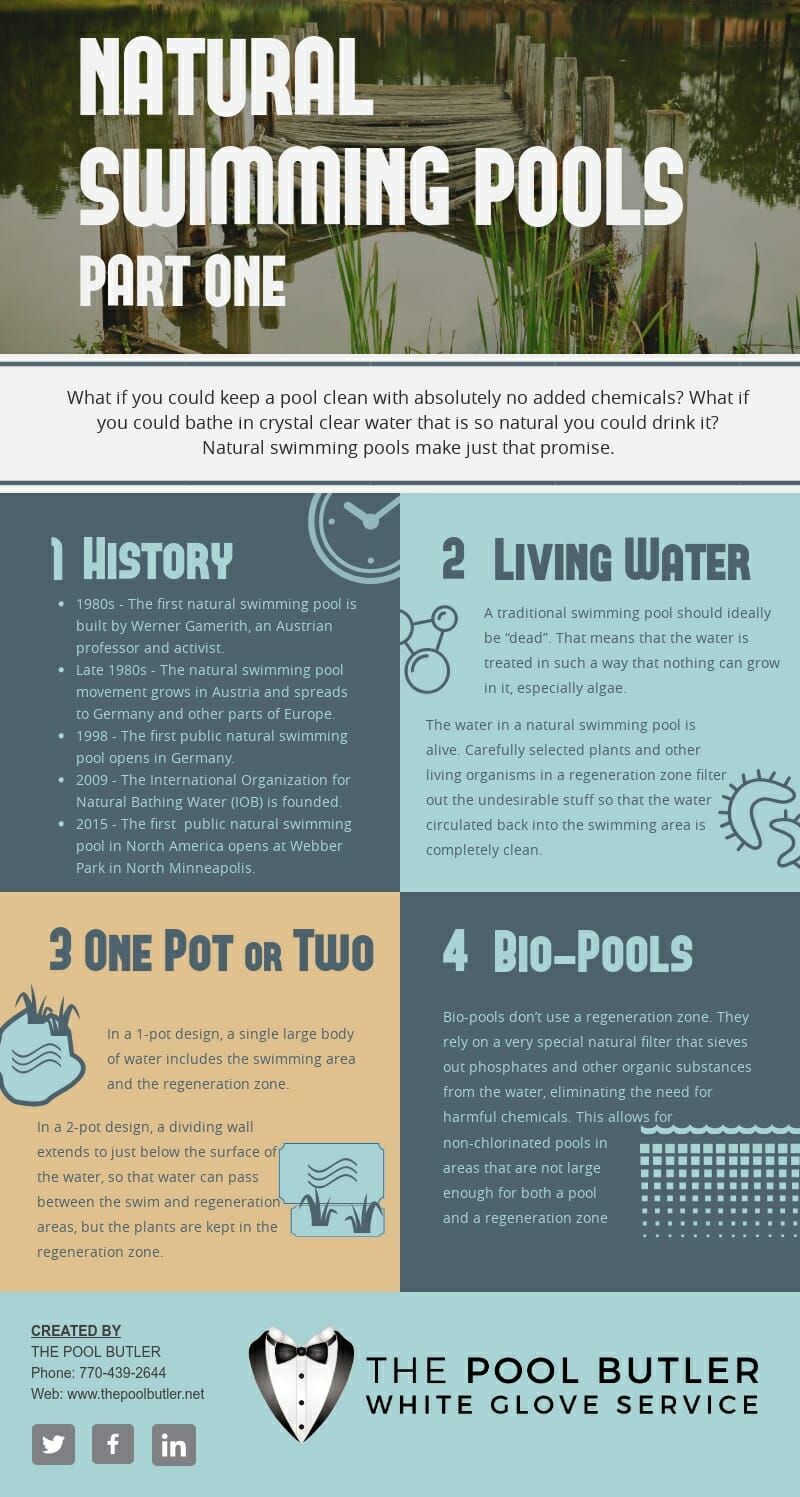
Image: This informative infographic lists routine maintenance tasks and their recommended frequencies. Source: The Pool Butler
Building an Ecologically Balanced NSP
Establishing and maintaining ecological balance within a natural swimming pool is critical for the pool’s functionality and attractiveness.
-
Ecological Interactions: The interplay among various plant species, microorganisms, and aquatic life fosters an environment conducive to overall health and stability. Achieving this balance is key to preventing excessive algae growth and ensuring consistently clear water.
-
Plant Diversity: Including different species with diverse nutrient uptake periods within the pool environment allows for efficient nutrient removal throughout the year. Such diversity contributes not only to ecological health but also enhances the pool’s visual appeal.
-
Enhancing Biodiversity: Introducing native aquatic plants, which are ideally suited to local climates and ecosystems, can significantly strengthen the stability and resilience of the pool environment.
Research underscores that a carefully curated plant community not only enhances water quality but also supports a vibrant ecosystem where aquatic organisms can thrive alongside human recreational activities.

Image: This image illustrates a natural swimming pool featuring a variety of aquatic plant communities. Source: Gardenista
Troubleshooting Common NSP Issues
Natural swimming pools can encounter occasional ecological challenges that necessitate thoughtful intervention.
-
Common Problems: Typical issues include algae blooms or nutrient overload, often arising from sources such as excessive organic material, inadequate water circulation, or improper plant selection.
-
Preventive Strategies: Incorporating design solutions—such as optimizing flow patterns and selecting appropriate indigenous plants—can preemptively mitigate risks associated with ecological imbalance.
-
Action Steps: Consistent water quality assessments and diligent plant management are critical for addressing ecological challenges. In instances of algal blooms, swift removal of excess organic material and appropriate adjustments to water parameters can effectively restore balance.
Research highlights the essential nature of design and management strategies in preventing potential issues, ensuring that NSPs remain a reliable and enjoyable recreational environment.

Image: A family enjoys their time in a swimming pool, illustrating a natural swimming pool’s appeal and a solution to maintenance issues. Source: Vecteezy
Conclusion: Embracing Natural Swimming Pools
Natural swimming pools provide an innovative and eco-friendly alternative to traditional swimming options.
-
Natural Filtration Benefits: By relying on the natural filtration capabilities of plants and microorganisms, NSPs offer a clean and safe swimming experience free from chemical treatments.
-
Ecological Importance: Maintaining ecological balance not only benefits the environment but also enhances the unique experience provided for swimmers, promoting well-being and leisurely enjoyment.
-
Encouraging Responsible Practices: Proper design, maintenance, and plant selection bolster environmental sustainability while improving the aesthetics and functionality of outdoor spaces.
As the push for sustainable living gains momentum, the adoption of natural swimming pools presents a timely opportunity for individuals and communities seeking to intertwine nature with leisure.
In conclusion, natural swimming pools empower homeowners to create serene, clean, and ecologically responsible swimming environments that prioritize both human recreational needs and the health of the surrounding ecosystems.